
MRI Neck Test: Price, Purpose, Procedure & Preparation
Magnetic Resonance Imaging (MRI) is a non-invasive imaging technique that uses a powerful magnetic field and radio waves to create detailed images of the body’s internal structures. When applied to the neck region, MRI can help in the diagnosis and evaluation of various medical conditions affecting the neck, such as neck pain, injuries, infections, tumors, and degenerative conditions like cervical spondylosis.
MRI of the neck is particularly useful for visualizing the soft tissues of the neck, including the muscles, nerves, blood vessels, lymph nodes, and the cervical spine. It can provide high-resolution images that allow doctors to better understand the nature and extent of the problem and develop an effective treatment plan. The price range of MRI of Neck is Rs 2499 to Rs 7500.
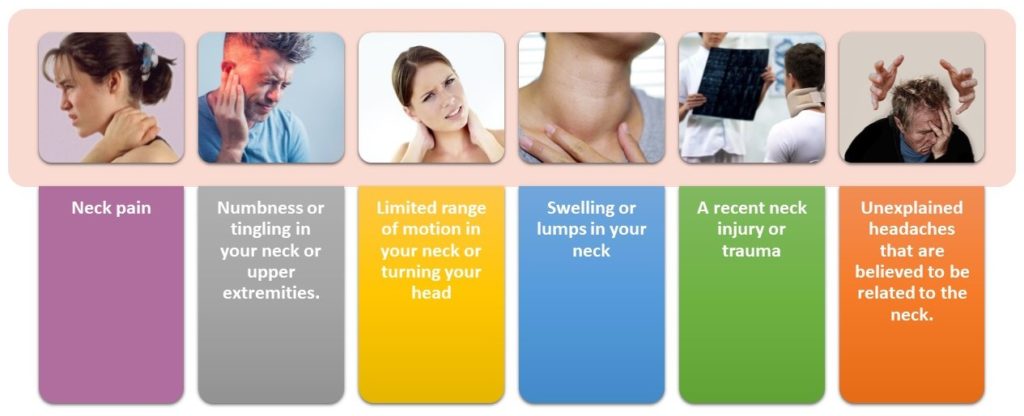
Your doctor may recommend an MRI neck if you have any following symptoms-
- Neck pain
- Numbness or tingling in your neck or upper extremities.
- Limited range of motion in your neck or turning your head
- Swelling or lumps in your neck
- A recent neck injury or trauma
- Unexplained headaches that are believed to be related to the neck.
MRI Neck Test Details in Brief
| Also Known As | Cervical spine MRI, MRI of the cervical soft tissues, Head and neck MRI, Neurovascular MRI of the neck |
| Purpose | To obtain detailed images of the structures within the neck region to help diagnose and guide treatment for various conditions such as spinal cord injuries, herniated discs, tumors, and infections. |
| Preparation | No special preparation required. |
| Fasting | No |
| Reporting Time | 8 to 24 Hrs. |
| Cost | Rs 2499 to Rs 7500 |
Price
MRI Neck Test Price usually ranges from Rs 2499 to Rs 7500. The actual price depends on the diagnostic center and the city. Bookmerilab partners with more than 200 diagnostic centers across India. We provide a 10-50% discount on medical diagnostic tests.
Prices at Popular diagnostic centres
The table below lists the prices at some of the popular diagnostic centres.
| Name of Lab | Test Price |
|---|---|
| Redcliffe Labs | Rs 0 |
| Mahajan Imaging | Rs 7200 |
| City X-Ray | Rs 4800 |
| Pulse Diagnostic Center | Rs 4550 |
| Vijay Diagnostics | Rs 7500 |
| Dr Lal path labs | Rs 6500 |
| Aarthi Scans | Rs 4050 |
Cost in different cities
The test cost depends upon the one recommended by your healthcare professional. The cost varies depending on the lab and the city.
| City | Test Price |
|---|---|
| MRI Neck Test Price in Delhi | Rs 2499 to Rs 7200 |
| MRI Neck Test Price in Mumbai | Rs 3623 to Rs 7225 |
| MRI Neck Test Price in Bangalore | Rs 4050 to Rs 4500 |
| MRI Neck Test Price in Hyderabad | Rs 3500 to Rs 7500 |
| MRI Neck Test Price in Gurgaon | Rs 4563 to Rs 4050 |
| MRI Neck Test Price in Chennai | Rs 4050 |
| MRI Neck Test Price in Kolkata | Rs 3150 to Rs 6650 |
Purpose
- Diagnosis of medical conditions: An MRI neck can be used to diagnose a range of medical conditions affecting the neck, such as herniated discs, spinal cord injuries, cervical spondylosis, tumors, infections, and inflammatory disorders.
- Evaluation of structural abnormalities: Identifies structural abnormalities in the neck such as bone spurs, cysts, or tumors.
- Assessment of nerve compression: Detects nerve compression or impingement, which can be a cause of neck pain, numbness, or weakness in the upper extremities.
- Treatment planning: An MRI neck can provide detailed images that help doctors plan appropriate treatment options, such as surgery or physical therapy, for patients with neck conditions.
- Monitoring of medical conditions: Also used to monitor the progression of medical conditions over time, such as tumors or degenerative conditions like cervical spondylosis.
Preparation
- It is best to wear loose, comfortable clothing to your MRI appointment as you will be asked to change into a hospital gown.
- Before the MRI, you will need to remove all metal objects from your body, such as jewelry, watches, piercings, hairpins, hearing aids, or any other metal objects, as these can interfere with the MRI images.
- If you have any medical conditions that may prevent you from having an MRI, such as claustrophobia, or kidney problems, you should inform your doctor before the MRI.
Procedure
- You’ll lie on a table that slips inside the MRI machine and is cushioned. Your neck will be centered in the device with the assistance of the technician while you maintain the proper posture.
- To improve the visibility of specific neck structures or tissues, a contrast agent may occasionally be injected into a vein in your arm.
- After you get into position, the MRI machine will start making a lot of loud tapping or knocking noises as it scans your neck. Throughout the scan, which takes 30 to 60 minutes on average, you must remain still.
Benefits of Neck MRI
There are some benefits of Neck MRI:
- Detailed Imaging – Enables the production of high-resolution images of soft tissues, the spinal cord, discs, and nerves in the neck.
- Accurate Diagnosis – Supports the identification of herniated discs, tumors, infections, and spinal cord injuries.
- Safe Procedure – Implements magnetic fields and radio waves, thus, there is no radiation exposure which is harmful to the body.
- Nerve & Pain Assessment – Can be instrumental in locating the origin of chronic neck pain, numbness, or tingling in the arms and shoulders.
- Treatment Planning – Helps physicians to decide on the most appropriate treatment method be it medication or surgery.
- Monitoring Progress – Aids in the process of recording recovery and treatment effectiveness over time.
- Non-Invasive & Painless – Provides a convenient method for the identification of neck problems without the need for surgery.
Risk
- The MRI machine is claustrophobic or uncomfortable for some individuals due to its tiny, tube-like design.
- Rarely, some persons may experience an allergic reaction to the MRI contrast material. Itching, hives, breathing issues, and facial, lip, tongue, or throat swelling are possible symptoms.
- Loud tapping or pounding noises made by the MRI machine during the scan may be uncomfortable for certain people or potentially dangerous. You could be given earplugs or headphones.
Result
- Herniated disc: An MRI of the neck can detect a herniated disc, which occurs when the soft, gel-like center of a spinal disc pushes through a crack in the tougher exterior casing, pressing on the nearby nerves and causing pain, numbness, or weakness.
- Cervical spinal stenosis: An MRI can show if there is a narrowing of the spinal canal in the neck, which can put pressure on the spinal cord and nerves, causing pain, weakness, or numbness in the neck, arms, or legs.
- Tumors: An MRI can detect tumors or abnormal growths in the neck, which can be benign or cancerous.
- Infections or inflammation: An MRI can show if there is an infection or inflammation in the neck, such as a deep neck abscess or retropharyngeal cellulitis.
- Trauma: An MRI can detect injuries to the neck, such as fractures, dislocations, or soft tissue damage.
Limitations
- The accessibility of MRI equipment in some places or healthcare systems may be constrained by their high cost and need for specific training in operation.
- It can be painful or inconvenient for some individuals to undergo an MRI scan that takes an hour or longer to complete.
- MRI scans can be pricey, and some insurance policies might not fully cover the expense of the procedure.
- This test can also be challenging to see certain structures with MRI, such as bone and air-filled gaps. Other imaging procedures might be thought of in these circumstances.
Conclusion
In conclusion, an MRI Neck test is a valuable tool for diagnosing and monitoring various medical conditions affecting the neck. While the test has some limitations, it provides high-quality images of the neck structures and is generally safe and non-invasive. The MRI Neck test helps doctors to make accurate diagnoses and treatment decisions, leading to better patient outcomes.
While an MRI of the neck is accurate in its diagnosis, it really helps in the identification of problems at the beginning stages, which can pave ways for the absence of future complications. Particularly, it becomes a valuable tool in the hands of the physicians dealing with a patient whose pain persists, whose swelling is not explainable or who is suffering from some kind of neurological disorder. In addition, from the aspect of the method, i.e., no radiation is involved, hence, it is a safer alternative to some other imaging methods. Besides diagnosis, doctors also take the results of MRI as a basis for their surgical or therapeutic plans. In general, it continues to be a dependable, safe, and very informative method for neck examination.
FAQs
You will lie on a table that slides into a large tube-shaped scanner. The scanner uses a magnetic field and radio waves to create detailed images of your body.
No, an MRI exam is not painful. However, some patients may experience discomfort or anxiety from the enclosed space of the scanner.
The duration of the exam can vary, but it typically takes between 30-60 minutes.
Yes, an MRI exam is generally considered safe. However, some patients with certain medical conditions or metal implants may not be able to undergo the test.
No, you will be in contact with the technologist who will operate the MRI machine.
Movement can cause blurred images, so it’s important to lie still during the scan.
Yes, most people can resume normal activities, including driving, immediately after an MRI of the neck.