
PET CT Scan: Price, Purpose, Side Effects & Proven Benefits [2026]
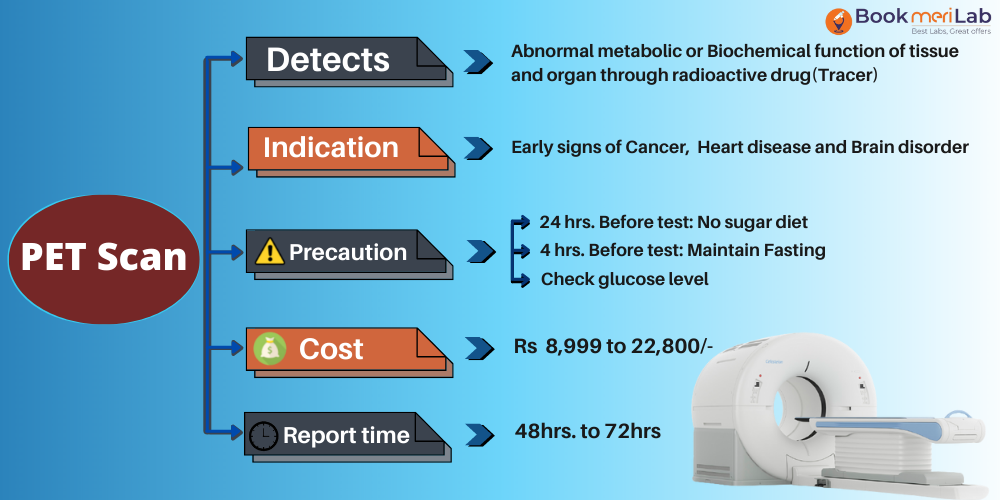
A PET CT scan (Positron Emission Tomography – Computed Tomography) is an imaging test that helps doctors check how your organs and tissues are working. It is often used to detect cancer, heart disease, and brain disorders. The test uses a radioactive tracer, such as Fluorodeoxyglucose (FDG), which highlights abnormal cells. These cells appear as bright spots on the scan, helping doctors find health problems early.
The PET CT scan cost starts at Rs 8,900 and can go up to Rs 30,000. Some special PET Scan studies like PSMA PET scans, may cost more, starting at Rs 21,000.The actual price will depend on the PET Scan centre, city, and type of the scan. We provide PET CT Scan facilities in Delhi, Mumbai, Navi Mumbai, Hyderabad, Bangalore, Aurangabad and Nashik.
PET CT Scan Brief Overview
| Also Known As | PET Scan, Positron Emission Tomography, Whole-body PET CT, PSMA PET CT, FGD PET Scan |
| Purpose | Examine blood supply, Metabolism, Cancerous Tumors, Heart Diseases, & Brain Disorders |
| Preparation | 4-6 Hours fasting, Remove Metals, No Sugar Diets, No caffeinated Drinks |
| Machine Used | PET Scanner |
| Results | 16-72 hours |
| Cost | Rs. 8900 to Rs. 30000 |
Fill the below form to request a callback.
PET CT Scan Price
The cost of a PET CT scan in India varies depending on the city, hospital, and diagnostic center. On average, the price ranges between Rs 8,900 and Rs 30,000. However, you can find discounts of up to 20%, and in some centers, the scan is available for as low as Rs 9,999.
Below is the list of City wise and Diagnostic centre-wise PET CT Scan costs in India.
City Wise PET Scan Cost
| Name of the City | Test Price |
|---|---|
| PET CT scan cost in Delhi | Rs 8900 to Rs 25000 |
| PET CT scan in Mumbai | Rs 9999/- |
| PET CT scan price in Hyderabad | Rs 9900/- |
| PET CT scan in Bangalore | Rs 12992/- |
| PET CT scan in Aurangabad | Rs 13600/- |
| PET CT scan in Nashik | Rs 13600/- |
| PET CT Scan in Chennai | Rs 9990/- |
Centre- Wise PET Scan Test Price
| Name of the Centre | Test Price (Rs) |
|---|---|
| Apollo Hospitals | Rs 23500/- approx |
| Max Hospitals | Rs 40876/- approx |
| Manipal Hospitals | Rs 38000/- approx |
| Yashoda Hospital | Rs 27000/- Approx |
Purpose of PET CT Scan
PET scan is used to examine the function of the cells. The doctors may recommend a PET scan test for the following reasons –
- A doctor may recommend a PET scan to identify chemical activity in body parts
- Measures blood sugar metabolism
- Detects any abnormality blood supply to tissues and organs
- It can detect oxygen supply to the tissue and its utilization by the body
- It can detect cancerous tumor cells
- To monitor the treatment plan
PET Vs MRI Vs CT Scans
PET CT Scan report changes at cellular levels thus it is able to diagnose an issue before a CT or an MRI scan. Thus, your doctor may recommend PET CT for some complex problems like
- Cancer diagnosis
- Tumours mainly brain
- Cardiovescular disease (Heart)
- Memory disorders

CT Scan vs MRI Scan Video
PSMA PET CT Scan
PSMA (Prostate-specific membrane antigen) is a PET CT Scan for the detection of prostate cancer. It usually costs more than a PET CT Scan. The cost ranges from Rs 16000 to Rs 30000. You can avail of up to 20% discount via Bookmerilab. Contact us at 08882-36-8882
DOTA NOC Scan
DOTA NOC is a PET CT Scan which uses Dota and Noc as radiotracers instead of FGD-18. This contrast media is specific and sensitive to the diagnosis of pancreatic tumours. Thus it is mainly helpful for gastropancreatic neuroendocrine tumors or pancreatic cancer and detects metastasis.
PET CT Scan Indications
The PET scan test is performed to diagnose the underlying issues in the brain, heart diseases, and even in detecting cancers.
- Cancer – It is beneficial for the below-given reasons:–
- It helps to detect cancer in Lung, Prostate, Breast, Thyroid, & related
- To check the spread of cancer
- Monitor the ongoing cancer treatment
- To check the recurrence of cancer
- Satisfactory results from Chemotherapy
- Heart disease – PET scan reveals the area of decreased blood flow or glucose metabolism of the heart. It helps the doctors decide the line of treatment.
- Brain disorders – This test is used to detect recurrent tumors sooner than other methods.
- Depression
- Alzheimer’s disease
- Epilepsy
- Cerebrovascular stroke
- Huntington’s disease
- Brain Tumors
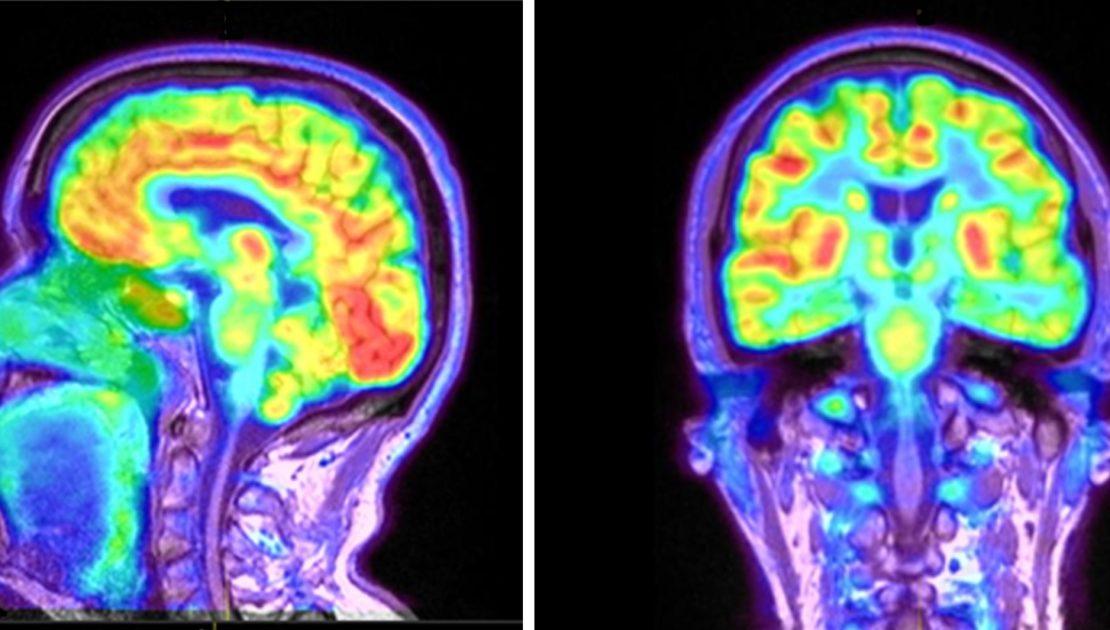
Given below is the PET scan images for the brain. The bright spots are the active areas that use more glucose than others.
Procedure
- It uses a simple technique in which a radioactive dye coupled with glucose compound is injected into the vein or it can be swallowed depending upon individual condition
- You are asked to sit on a chair for about an hour to allow the dye to pass into the bloodstream
- These radioactive dyes are absorbed by the organs and tissues
- Before entering the scanner your healthcare provider will ask you to lie on a sliding table
- The table is then moved in and out of the tunnel-shaped scanner
- One must remain still during the procedure as movement may blur the image
- Your healthcare provider will review the scan and prepare the report. It takes around 30 minutes to 1 hour for a test depending upon disease and organ
PET CT Scan Preparation
Your healthcare provider will instruct you on the preparations required for the PET scan. If you are under any medication or have taken any supplements, inform your doctor about it.
- Keep a list of supplements and medicines you take
- Let your doctor know if you are pregnant, even breastfeeding
- Avoid caffeine if you are going to be tested for a heart problem
- Wear loose & comfortable clothes
- You may be asked not to eat anything for a few hours before the PET scan
- Eat a limited amount of carbohydrate diet a day before the test
- Avoid eating and drinking anything 6 hours before the PET scan test, but one can drink water
- If you are under certain medication your doctor may suggest taking medicines before the test
- Diabetic patients are advised to take medicines 4 hours before the PET scan test
Side Effects
The entire PET CT scan test is painless with few risks. There is no emission of radiation from the scanner. Radiotracer used does not require the standard radiation precautions.
- There may be localized pain and swelling at the injection site
- In rare cases, some may be allergic to using contrast dye
- Claustrophobic people may become nervous in the PET Scanner
- Obese people are not able to fit in the scanning chamber. Also, the radiotracer used may not be able to provide a quality image
- Patients undergoing PET scans may have nausea, vomiting, headache, itching, and mild rashes. It may occur as a result of contrast dye used for CT
- For a diabetic patient, make sure that the blood sugar level is less than 200mg/DL before scanning
Benefits of PET CT Scan
- It provides unique information which cannot be attained by other imaging techniques. It provides detailed information on the function and anatomy of the organs and tissues
- Less expensive and provides detailed information when compared with exploratory surgery
- PET scan is the most useful diagnostic tool for various diseases
- The test is beneficial for the doctors to make the best treatment plan
Results
PET scan result is ready within 1-3 days after the test. The result indicates the normal and abnormal findings.
The scan may show some highlighted areas. These are the areas of excessive absorption of radiotracers. It indicates high cellular metabolism and may suggest cancer.
- The Normal result indicates no problem in the shape, size, and position of the organ. Scan shows no areas of accumulation of tracers
- If the result is Abnormal, it indicates cancer, infection, or a problem in the functioning of the organ
Conclusion
PET CT scan is beneficial for the PET-Scanners to see the damage caused by the disease and how our body responds to it. PET scan identifies the changes in cellular level and how it may help detect the onset of diseases before other imaging tests can.
FAQ’s
The cost of a PET scan in India depends on the city, diagnostic center, and the type of scan. Prices generally range between Rs 8,900 and Rs 30,000. Specialized scans, like PSMA PET scans, may cost more. Some diagnostic centers offer discounts, so it’s a good idea to check for deals before booking.
Yes, a PET scan is an excellent tool for detecting cancer. It highlights areas with high cellular activity, which often signals cancerous tumors. Doctors use it to diagnose cancer, track treatment effectiveness, and check for recurrence in organs such as the lungs, breast, and prostate.
A PET scan and a CT scan serve different purposes, so neither is outright “better.” A PET scan detects metabolic activity and cellular changes, making it ideal for diagnosing diseases like cancer at an early stage. In contrast, a CT scan creates detailed images of the structure of tissues and organs, helping identify physical abnormalities.
For a more comprehensive evaluation, doctors often recommend a PET-CT scan, which combines the strengths of both technologies.
No, coconut water should be avoided before a PET scan because it contains sugar. For accurate results, patients are usually advised to fast for 4-6 hours and follow a low-sugar diet. If you’re thirsty, stick to plain water instead.
Yes, a whole-body PET scan is often done to detect cancer spread, monitor treatment progress, or diagnose systemic conditions. It examines all major organs and tissues, giving a complete view of the body’s health.
After a PET scan, avoid close contact with pregnant women and children for a few hours, as small amounts of radioactivity may remain in your body. Additionally, drink plenty of water to flush out the radiotracer, and follow any specific advice from your doctor.
Both scans have their strengths. A PET scan is better for detecting metabolic activity and early-stage diseases like cancer. An MRI, however, provides detailed structural images, making it ideal for diagnosing soft tissue conditions like brain or spinal disorders. Your doctor will recommend the best option based on your condition.
A PET scan typically takes 30 minutes to 1 hour. However, the entire process, including preparation and waiting for the radiotracer to circulate in your body, may take up to 2-3 hours. Be prepared to remain still during the scan for accurate results.
A PET scan shows how organs and tissue are functioning, provides images of cancer, reveals heart health or disease, or shows brain disorders where there is no damage. This provides detailed images that physicians use for diagnosis and treatment planning based on accurate data.
PET scans are generally safe. The risks of a PET scan include some radiation, allergic reactions to the tracers, and any discomfort from lying still. If you are pregnant or breastfeeding, you need to tell your doctor and follow the advice of your physician.
Resting before your PET scan will keep your body calm, which will help lower the activity of your body and all of your muscles. If you are active, the muscles take up all the tracers, preventing the imaging from working correctly.
After your scan, you need to drink a lot of water to flush the tracers out of your system, avoid close contact with pregnant women or infants for about four hours, and keep following any other instructions the doctor has given you.
PET scans take about 1 to 2 hours, which includes the time to insert the tracer.
PET scan reports are usually completed within 24 to 48 hours. In some hospitals, urgent cases could receive reports quickly depending on the flow of the doctors and the facility.
Dr Bhumika Rana
Dr Bhumika Rana is a Bachelor of Ayurvedic Medicine & Surgery (B.A.M.S.). Earlier She was an Operation Specialist at AIIMS Delhi & a Medical officer with the National health mission.