
Paneer Protein per 100g: Nutrition Facts and Health Benefits
Paneer Protein per 100g is an important number to know. If you eat paneer or cook with paneer, you have to know its protein value. Made from milk, Paneer is a soft Indian cottage cheese. Thus, a small serving offers a good amount of protein. One hundred grams of paneer yields twenty grams of top-quality protein for your body. This protein aids in muscle development, repair, satiety, and bone health, while also countering aging effects. Paneer is nutritious and provides energy and strength, but it is not suitable for everyone. Paneer and other milk products are thus an easy way for vegetarians and non-vegetarians alike to increase daily protein without too much complex planning. Paneer can be eaten in salads, curry, wraps, or even as a snack. Keep in mind that consuming excessive amounts of paneer can lead to high-calorie intakes. Take the small portions and use less oil during cooking. Information on the Paneer Protein per 100g helps you in meal planning and meeting your dietary needs. Don’t overeat paneer.
Protein and Nutrition Facts of Paneer
There are some Protein and Nutrition Facts of Paneer:
- Paneer Protein per 100g: approximately 18-20 g of high-quality protein.
- Calories: Calories contain roughly 300-320 kcal per 100g which is energy-dense.
- Fat: Full-fat paneer has more fat than normal paneer.
- Calcium: Calcium is an excellent source that helps keep bones and teeth strong.
- Vitamins & minerals: It provides B12, phosphorus and potassium vitamins and minerals.
- Carbohydrates: very low in carbs, suit low carb eating.
- Protein type: The protein type is mainly casein, which is slow-digesting and keeps you full for longer.
- Best for: Ideal for those who love vegetarian food, athletes and anyone who is looking for extra protein.
- Portion tip: An ideal serving for most adults can vary from 50 to 100 g.
- Cooking note: To minimize the oil and calorie content, grill or bake.
Health Benefits of Paneer
There are Top Health Benefits of Paneer:
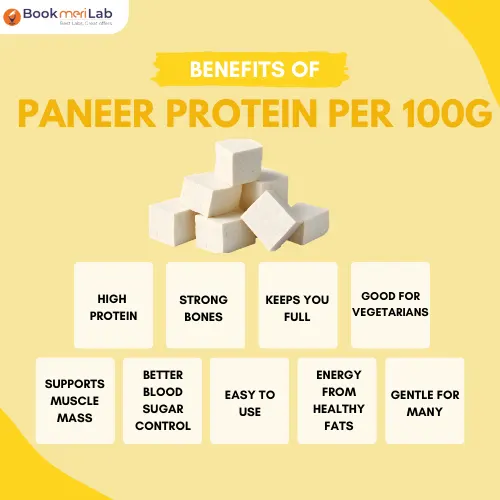
- High protein: Paneer Protein per 100g has about 18–20 g of protein that helps in building and repairing muscles.
- Strong bones: Paneer’s calcium content helps in strengthening the bones and teeth along with keeping them healthy.
- Keeps you full: It will keep you full for longer because of its slow-digesting protein that curbs snacking.
- Good for vegetarians: Paneer supplies vitamin B12 and quality protein, both of which help vegetarians meet nutrient requirements.
- Supports muscle mass: Having paneer regularly along with exercise helps in maintaining or increasing muscle power.
- Better blood sugar control: Low carbohydrates and protein avoid rapid sugar spikes following meals for better blood sugar control.
- Energy from healthy fats: Paneer provides a high amount of fat which supplies steady energy throughout the day.
- Easy to use: It is easy to use as you can add them to salads, curries, wraps, or just enjoy them as a snack to get an instant nutritious boost.
- Gentle for many: Many people with mild lactose intolerance tolerate paneer better than milk.
- Eat in balance: Consume paneer in moderation because full-fat paneer is high in calories.
How Much Paneer to Eat Daily
Knowing the Paneer Protein per 100g will help you to decide the right amount for your daily consumption.
- For most adults: Generally, most adults can consume 50 to 100 g paneer (which supplies roughly 9 to 20 g protein) daily.
- For people who exercise a lot: People who do heavy workouts may take 120 to 150 g daily to fulfill higher protein requirements.
- For individuals trying to lose weight: limit to 50 g and choose grilled or low fat paneer.
- For children: give smaller portions, around 25 to 50 g based on age and appetite.
- For older adults: 50 to 100 g to maintain muscle and bone health.
For personalized intake advice, consult a doctor. Combine paneer with veggies, grains, and other protein sources. Modify the portions according to your health objectives.
Easy Ways to Include Paneer in Your Diet
Paneer Protein per 100g makes paneer an easy and quick way to boost protein in your meals.
- Add cubed paneer to salads for a protein boost.
- Grill or bake paneer tikka instead of frying to cut oil.
- Mix paneer into wraps or sandwiches with veggies.
- Have a light paneer bhurji for breakfast with whole-grain toast.
- Throw paneer cubes in soups or stir fries for their extra texture.
- Take low-fat paneer with smoothies or mashed with herbs as a dip.
- Make paneer, stuffed parathas for a wholesome meal.
Consuming small, regular portions of paneer helps to keep your meals balanced and healthy.
Tips and Precautions
Paneer Protein per 100g is good for you, but a few tips can help you get the most out of it in a safe way.
- Choose cooking methods wisely: Instead of deep frying, grill and bake.
- Watch portions: 50 to 100g per day is sufficient for most adults.
- Balance meals: Paneer alongside vegetables, grains, or legumes results in better nutrition.
- Check freshness: Get fresh or branded paneer that does not contain preservatives.
- Lactose sensitivity: Gradually increase the quantity if you have mild lactose intolerance.
- Dairy allergy: Do not eat paneer at all if you are allergic to milk.
- Calorie awareness: Since full fat paneer is very high in calories, you should eat it in moderation.
If you want to enjoy paneer in a healthy and safe way, you should follow these tips.
Conclusion
One of the easy and healthy sources of protein for a lot of people is Paneer. Having knowledge about Paneer Protein per 100g, allows you to prepare your meals as per your protein requirement of the day. 20 grams of excellent protein is one of the contributions to your diet from paneer, along with other essential nutrients like calcium, vitamin B12, phosphorus, and healthy fats. All these nutrients work effectively for the muscle building, bone strengthening, and energy giving processes. Consume paneer in small amounts and if possible, grill, bake, or lightly sauté instead of deep frying. You may also combine paneer with vegetables, whole grains, and legumes to create a well-balanced diet. Prefer fresh or packaged paneer and stay away from it if you are allergic to milk or severely lactose intolerant.
In case you are concerned about your overall health, you may need a Full Body Checkup and a Serum Creatinine Test to evaluate your kidney condition. Frequent testing assists in detecting problems at an early stage and maintaining good health.
FAQs
100g paneer contains about 18-20 g high-quality protein, which helps build muscle, repair tissue, and keep you full daily.
Tofu is lower in fat and calories; paneer has more protein and calcium. Choose tofu for weight loss, paneer for strength.
Paneer can be high in fat, especially full-fat types. Choose low-fat paneer and grill or bake to reduce calories effectively.
Yes, you can eat paneer during weight loss. Use 50 g portions, prefer low-fat paneer, and grill instead of frying.