
Makhana Benefits for Health: Nutrition, Weight Loss, Diabetes & Kids
Makhana benefits make these crunchy lotus seeds a healthy snack suitable for all ages. Makhana (fox nuts) have a low calorie count, but they are a rich source of protein, fiber, calcium, and antioxidants. Consuming makhana can support digestive health, regulate blood sugar levels, keep the heart healthy, and help with weight loss if you replace fried snacks with them. They are very easily digestible, and kids can consume them in moderate quantities safely. Here, the article sheds light on the benefits of makhana along with easy ways of consumption and precautions to help you stay healthy and energetic.
What is Makhana?
Makhana, also known as fox nuts or lotus seeds, are tiny, crunchy seeds that grow on an aquatic plant. People use this ingredient to create a crispy, light snack. For ages, they have been a food item in India and Asia. Fox nuts, aka Makhana, are low calorie and easy to digest. They have fiber and protein, which help in boosting bone health and heart health. Since they are easy on the stomach, makhana makes a good snack for children and the elderly.
What Nutrients Does Makhana Contain?
Makhana has simple nutrients that help the body.
- Makhana contains protein that repairs muscles and keeps you full.
- It also has fiber, which helps in good digestion.
- Calcium and magnesium present in makhana are good for bone and heart health.
- Potassium and iron in makhana play an active role in blood health.
- Makhana contains antioxidants that work to protect your cells.
- It is low in fat and calories.
These nutrients make makhana a healthy snack for weight control, blood sugar care, and for kids. Eat roasted or lightly spiced makhana in small portions daily to get these benefits. Watch portions and consult a doctor for kidney issues.
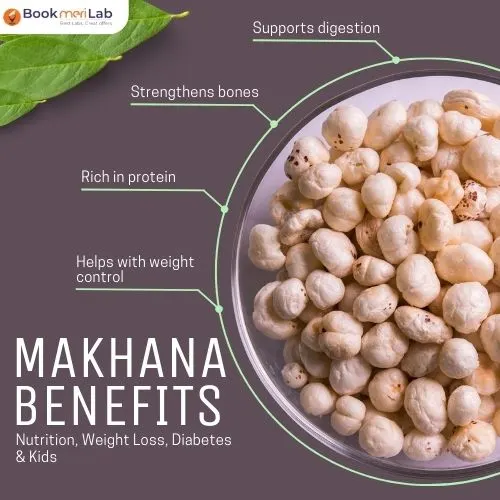
Top Health Benefits of Makhana:
Makhana offers many health benefits in a simple, natural form. Below are the main benefits written in easy words and short points to help you understand quickly:
Supports digestion
Makhana is a good source of fiber. This fiber helps food to move smoothly through the intestine and prevents constipation. Also, the gentle fiber soothes the stomach.
Helps with weight control
One of the great things about makhana is that it’s very low in calories yet highly filling. So, if you eat this instead of fried snacks, you will automatically consume fewer calories and thus lose weight.
Good for blood sugar
Both the fiber and the low glycemic index of this food contribute to slowing down the release of sugar in the blood. This makes makhana a safer snack choice for people with diabetes.
Strengthens bones
Makhana is rich in calcium and magnesium, which are the key minerals to keep bones strong and teeth healthy, not only in children but also in adults.
Supports heart health
Makhana has low fat and contains minerals that help keep blood pressure in a healthy range. Choosing makhana over salty fried snacks is better for the heart.
Rich in protein
Protein in makhana is essential for the growth and repair of body tissues. Besides, it helps in making one feel full after a meal.
Contains antioxidants
Makhana is loaded with natural antioxidants, which in turn help in shielding the cells from injury. The antioxidants in makhana may reduce low level inflammation as well as have great effects on long term health.
Easy for children and older adults
When makhana is roasted, it becomes soft and easy to chew. It is gentle on the stomach and thus is suitable for both kids and senior people.
Low in fat and simple to prepare
There is hardly any fat in plain roasted makhana. You can cook it with light spices or add it to salads and yogurt without adding many calories.
May improve sleep and calm the body
Certain minerals found in makhana have been known to facilitate proper nervous system function, which is one of the ways to get good sleep. Therefore, consume it at night if you want to sleep better.
Good snack for fitness
By combining protein and carbs, makhana provides long-lasting energy. It can be your go-to healthy snack before and after light workouts.
Makhana is a healthy, natural snack that can fit into many diets. Eat it in moderation and choose roasted or lightly spiced versions for the best health effect.
Makhana for Kids
Makhana is a gentle and healthy snack for kids. Roasted makhana are easily chewable and kind to the stomach. They provide protein and calcium, which contribute to growth and strong bones. Makhana also contains fiber, which aids digestion and prevents hunger in children between meals. Don’t add too much salt or oil. Give small servings and combine with yogurt or fruit. In case of a child’s health condition, consult your doctor before use and be cautious of allergies. Initially, try only a small bite.
Easy Ways to Eat Makhana Every Day
Here are simple ways to eat makhana every day:
- Dry roast and have makhana as an easy snack.
- Mix the roasted makhana with yogurt or salad to get the crunch.
- Combine with a few nuts and dried fruit to get a healthy trail mix.
- Prepare a simple masala with a little oil and gentle spices.
- Add makhana in soups or porridge to give them a different texture.
- Grind makhana into flour for pancakes or to thicken soups.
Choose roasted and low salt options to get the best makhana benefits.
Side Effects & Precautions
Makhana is safe for most people, but take these precautions:
- Eat in small portions, which helps to avoid stomach upset.
- A high amount of fiber can lead to gas or bloating.
- Those who have kidney stones must get the doctor’s permission first.
- Don’t add too much salt or oil when cooking.
- Be alert to any allergic reaction e.g., skin rash or swelling.
- Ensure proper cooking to eliminate any hard pieces that may choke children.
If you have health concerns, talk with your doctor before use and stop if you feel unwell.
Makhana vs. Other Snacks
Here is how makhana compares with common snacks:
- Makhana vs potato chips: Makhana has less fat and fewer calories than potato chips.
- Makhana vs popcorn: lower in calories but has more protein and calcium.
- Makhana vs roasted nuts: Makhana is lower in fats and calories than roasted nuts.
- Makhana vs biscuits: Makhana is better than biscuits as it has less sugar and is helpful for blood sugar.
- Makhana vs fried snacks: Makhana is less oily and a cleaner option than fried snacks.
- Makhana vs seeds: higher in calcium and more easily digestible for kids.
Pick roasted, low salt makhana for a healthier snack option in small portions.
Conclusion
Makhana is a healthy and simple snack that is high in protein and fiber. Gentle on kids while helping with weight control and digestion, can be good for the heart too. Pick roasted or lightly spiced makhana and pass on the extra oil or salt. Consume portions in small servings and include a variety of whole foods. Consult your doctor if you have any health issues or diabetes, and get a Full Body Checkup and an HbA1c Test to monitor your health. Keep yourself hydrated and active.
FAQs
Is it good to eat makhana every day?
Yes, a small amount of roasted makhana daily is considered to be healthy. However, try to minimize the use of salt or oil and be careful about your portion sizes.
Is makhana high in protein?
Makhana has a moderate level of protein, but not nearly as much as legumes. It can be a good source of protein in snacks, but it should not be considered the main one.
Does makhana make skin glow?
Makhana is rich in antioxidants and minerals, which are good for skin health, but glowing skin needs an overall diet, water, sleep, and sun protection.
Which time is best to eat makhana?
Makhana is a perfect snack to be eaten in mid-morning or evening, or even before a light exercise. Just make sure not to consume a large quantity right before sleeping.