
1 Apple Calories: Nutrition, Benefits & Weight Management
1 Apple Calories reveals that a medium fresh apple contains approximately 95 calories. Apples are very low in fat but are an excellent source of fibre and vitamin C. Besides providing a feeling of fullness with very few calories, they contribute to healthy digestion. If you’re craving a snack, having an apple will make you less hungry and help your weight management efforts, especially when eating a balanced diet. It’s best to pick whole apples rather than juice in order to keep more fibre and remain full for a longer time. Below are some easy tips and serving suggestions.
Calories in One Apple
Here are the calorie counts for a single apple:
- Small apple: A small apple that weighs approximately 150 g contains around 77 calories.
- Medium apple: A medium apple that weighs about 182 g contains roughly 95 calories.
- Large apple: A large apple that weighs around 223 g has 116 calories.
- One cup chopped apple: One cup of chopped apple contains approximately 65 calories.
- Apple juice: A glass of apple juice 240 ml contains roughly 120 calories.
These numbers are estimates and may change depending on variety and ripeness. Choose whole apples for more fibre and to feel full longer.
Nutrition Facts of One Apple
Here are the nutrition facts for one medium apple (182 g) broken down:
- Calories: A medium-sized apple has approximately 95 calories, so it’s an ideal light, healthy snack.
- Carbohydrates: Total carbohydrates come to roughly 25 g, which supply energy quickly.
- Dietary fibre: Fibre content is approximately 4.4 grams, and it promotes digestion and bowel regularity and also makes you feel fuller for a longer time.
- Sugars: Natural sugar is roughly 19 grams, and it is not the added sugar from processing.
- Net carbs: Net carbohydrates, after subtracting the fibre amount to approximately 21 grams that can be used for energy counting.
- Protein: Apples are low in protein, containing roughly 0.5 g of protein.
- Fat: Fat is very low at about 0.3 g per fruit.
- Water: The apple is made up of 86% water that maintains hydration and aids digestion.
- Vitamin C: Around 8 mg of vitamin C helps in boosting immune system functioning and improves skin.
- Potassium: About 195 mg of potassium helps the heart and muscle functions.
- Other nutrients: Small amounts of vitamin K, vitamin B6, manganese, and antioxidants help overall health.
Use these facts to plan healthy snacks and meals each day. Pair apples with nuts or yogurt to add protein and stay full longer.
Health Benefits of Apples
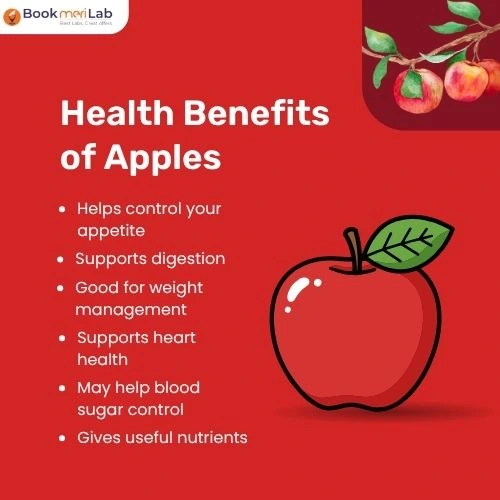
Apples are tasty, easy to eat, and good for daily health. A medium apple has about 95 calories, so it is a smart snack when you want something light and healthy. There are six health benefits:
Helps control your appetite
Apples have fibre, which keeps you full for a long time and helps prevent extra snacking.
Supports digestion
The fibre in apples helps food move well through the stomach and supports healthy digestion.
Good for weight management
Apples are low in calories and high in water; they can fit well in a weight loss plan.
Supports heart health
Apples have fibre and natural plant nutrients that may help keep the heart healthy.
May help blood sugar control
Eating a whole apple can help slow down sugar release in the body.
Gives useful nutrients
Apples provide vitamin C and other good nutrients that support daily health.
An apple a day is a simple habit that can easily support a healthy life.
Apples and Blood Sugar
For a lot of folks, apples are a good fruit choice. A medium apple has fibre and natural sugar. This fibre helps the body slowly release sugar. Because of this, apples usually don’t raise blood sugar as quickly as some sweets do. Eating a whole apple is better than drinking apple juice because juice has less fibre. You can also have an apple with almonds or yogurt to make it more balanced. This will keep you happy and provide you with a steady stream of energy. It’s easy to add apples to your daily life as a nutritious and simple snack.
Apple Varieties & Sugar Content
There are several kinds of apples, and each one has a slightly different amount of sugar.
- Granny Smith apples are sour and usually have less sugar.
- Fuji apples are sweeter and have more sugar.
- Gala apples are sweet and mild.
- Red Delicious apples are sweet and delicate.
- Green apples are frequently fresher and make a wonderful light snack.
Eating entire apples is good for you. The ideal decision for you will rely on your health and taste. Eating whole apples is healthier than drinking juice since they have more fibre and keep you full longer.
How Many Apples Per Day?
Eating one or two apples a day is good for most people. An apple has fibre, vitamins, and about 95 calories, which makes it a nutritious snack. Some people may get too much sugar from eating too many apples, and it may upset their stomach. Eating apples alongside other meals, like nuts or yogurt, is better for you. If you want extra fibre, always choose whole apples over juice. Pay attention to your body and change how much you eat based on your health objectives and daily demands.
Side Effects & Precautions
Apples are healthy for most people, but a few simple care points are important.
- Some people may get gas or bloating if they eat too many apples.
- Apple skin may bother people with sensitive stomachs.
- Rarely, some people may have an apple allergy.
- Apple juice can raise blood sugar faster than whole apples.
- People with diabetes should check portion size.
- Wash apples well before eating to remove dirt and chemicals.
- If you have stomach or sugar problems, eat apples in moderation.
Apples are safe and useful for most people when eaten in a simple and balanced way.
Conclusion
There are about 95 calories in a medium apple, and it is full of fibre, vitamins, and antioxidants. Eating apples on a daily basis will help you stay full, maintain your heart and blood sugar healthy, manage your weight, and aid your digestion. Some kinds may taste sweeter or more sour than others, but they are all good for you. Eating apples every day is an easy approach to improving your health. A Full Body Checkup is a good way to get a full picture of how your body is doing. The HbA1c Test can give you significant information about your health if you wish to keep track of your sugar levels over time.
FAQs
Is 1 apple a day ok?
Yes, one apple a day is a healthy choice for most people. It gives fibre, vitamins, and natural energy with few calories.
Are 2 apples a day too much sugar?
For most healthy people, two apples a day is still fine. They contain natural sugar, but the fibre helps balance it.
Is an apple good for high BP?
Yes, apples may help support healthy blood pressure because they contain potassium, fibre, and plant nutrients that are good for the heart.
Which is more healthy, apple or banana?
Both are healthy fruits. Apples have more fibre and fewer calories, while bananas give more energy and potassium.